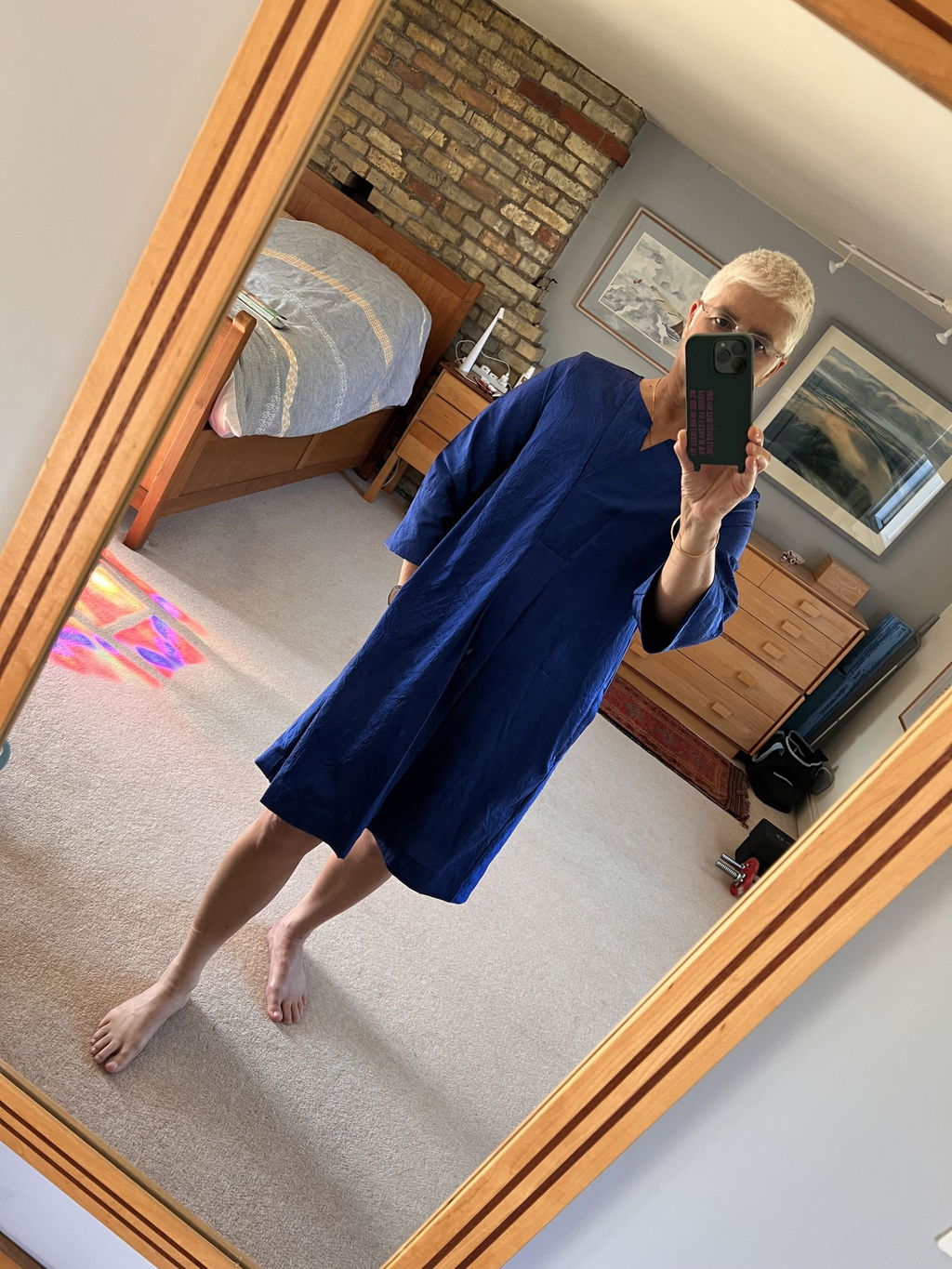


I know, I know, a lot of us are here for the slow sewing.... but sometimes you just need to speed up the process, and it's normally at times like this when sewing a gift (or am I the only one that leaves gift sewing to the very last minute?!).
Today I thought I'd give you some tips for how you could speed up the process of sewing the Whitlow robe for those of you who might need it. These tips can be applied to any speed sewing projects!
1. Get organised
One of the main things that will slow you down is not having all your materials and your space organised. Make sure you have all the tools and correct notions ready before you get sewing. Clear your space and try to put things back in their place as you go, so when you need your scissors, you know exactly where they are.
If you sewing machine or overlocker doesn't have a thread catcher, try grabbing a kitchen bowl and using it for cut threads and trimmed fabric etc. It will make clean up much faster!
2. Batch cut and sew
If you plan to make a few robes, consider batch cutting and sewing. Cutting and sewing multiples definitely speeds up the process. If the fabrics are a similar colour you can also sew each seam in a factory line. This means that when you're getting up to iron something, you will be able to iron multiple seams at the same time. Same goes for overlocking, trimming seams etc. For those of you interested in batch sewing, you might find some more tips in this post.
3. Use a serger / overlocker instead of French seams
I know French seams are the dreamiest of all seam finishes, and well worth the effort, but if you're short on time it could be a good idea to ditch the French seams for a faster option. In this case, overlocking / serging will be your friend. In the instructions, if overlocking, we suggest overlocking the seam allowances separately so that you can press them open and minimise bulk. If using a lightweight fabric we suggest finishing seams together. This will give the seams stability, and minimising bulk isn't as important with lightweight fabrics. It will also make for a speedier sew.
If you're not using French seams, but you would like to sew the in-seam pockets, you could use the same pocket technique that we used for the Neale jumpsuit.
4. Sew more than one seam before pressing
Try sewing as many seams as possible before heading to the ironing board. This way you can iron seams all at once and cut down the number of times you need to go between the sewing machine and the ironing board.
5. Take advantage of little pockets of time
This one doesn't actually speed things up, but you may be able to take advantage of pockets of time that you didn't think you had. How about a quick 20 minutes of sewing before work? It's best to have your sewing machine set-up, threaded and project cut if you are going to try this out. You might only get a seam or two done, but over the course of a week, this can really add up.
6. Think about your workflow when pinning
Place pins sideways on seams with the pin head facing out. This means that you can quickly and easily remove them as you sew. If your pins need to be in line with the seam (for example, when you are stitching in the ditch), have the pin heads closest to you so that they can be easily removed as you sew.
I know some people would say losing the pins will speed things up as you sew, but I'm a lover of pins and accuracy, so I'm not going to encourage this one. It's up to you though if you'd like to give it a go!
Do you have any tips for speeding up how long a project takes to sew? Or are you all about embracing the slow sewing?