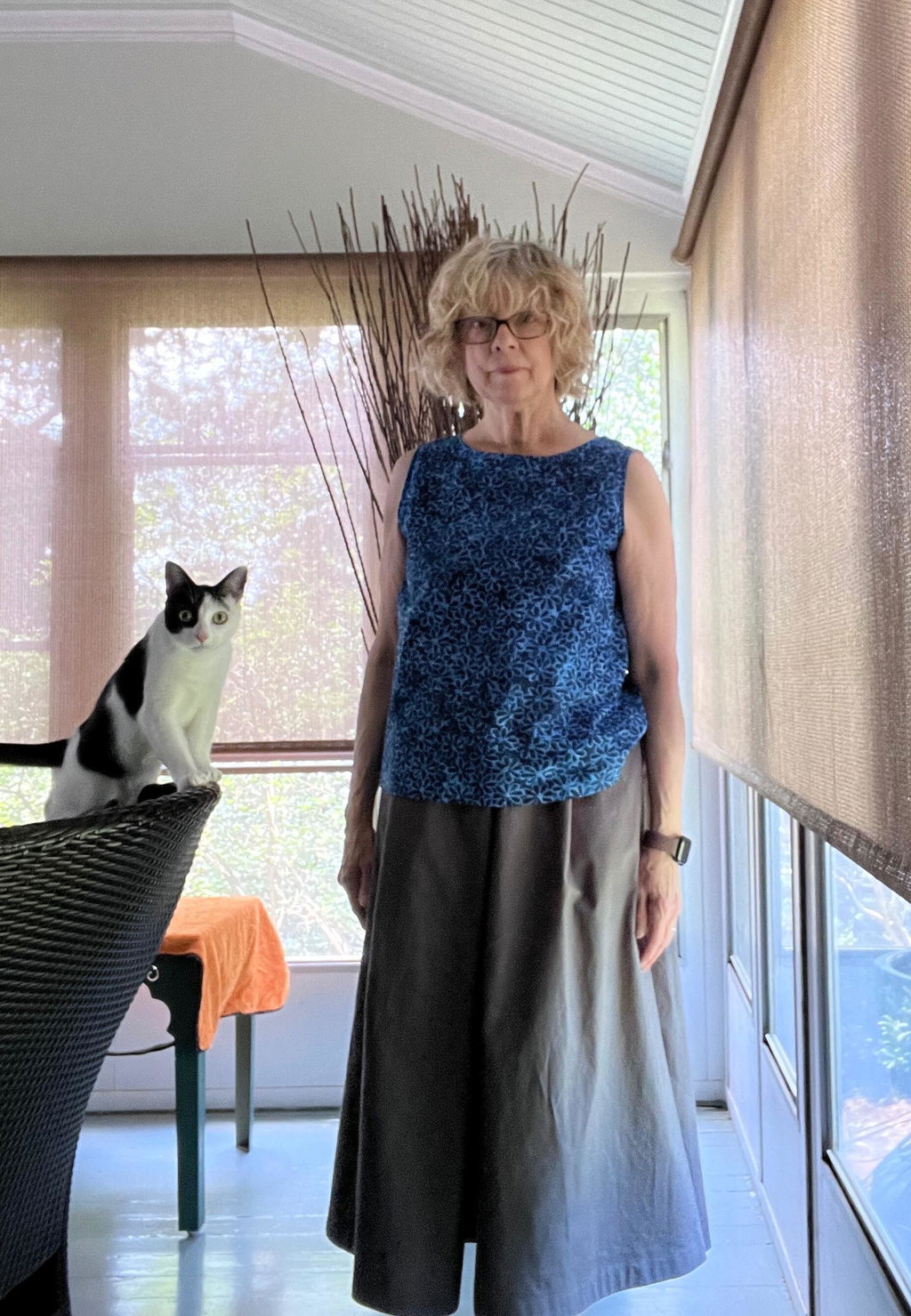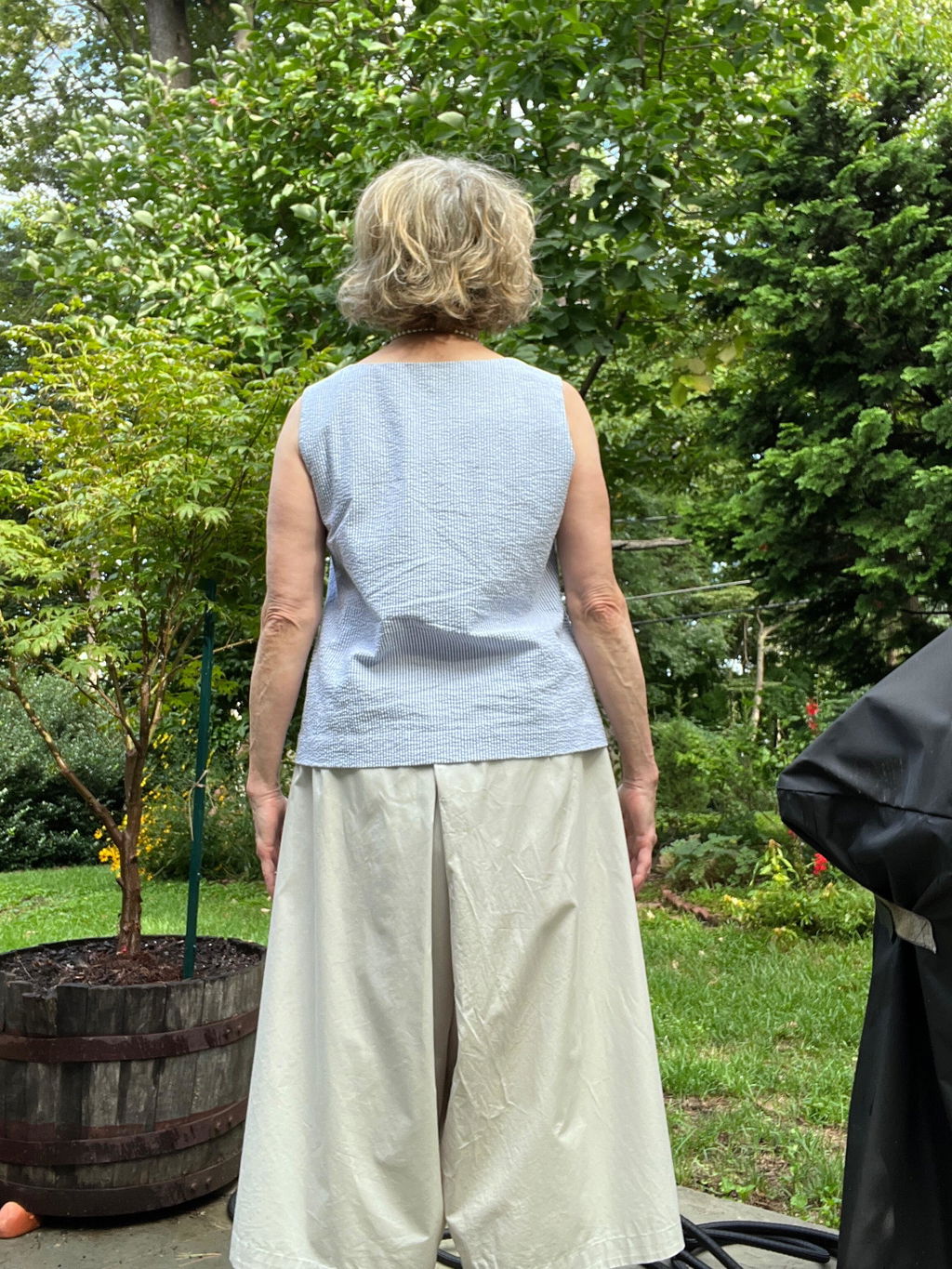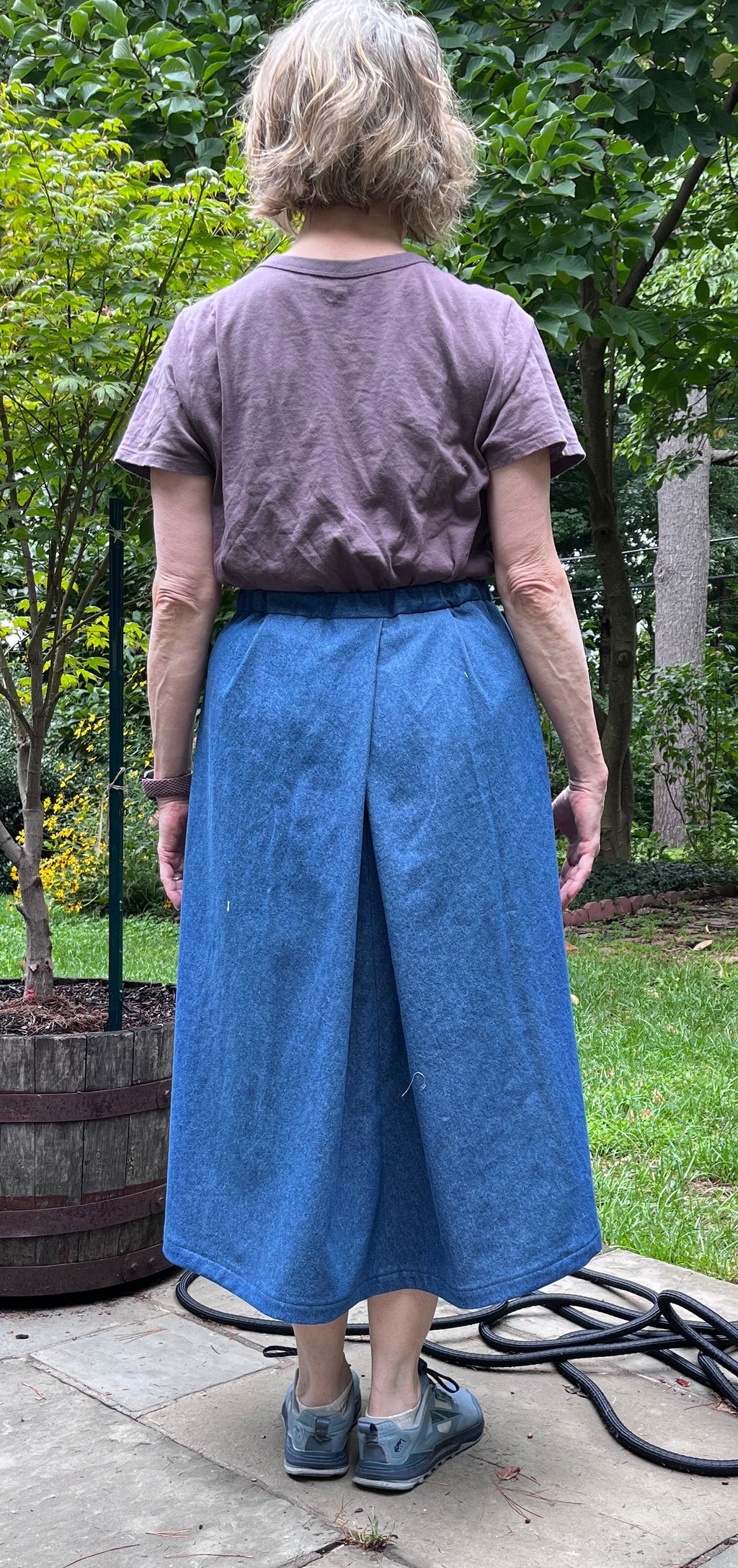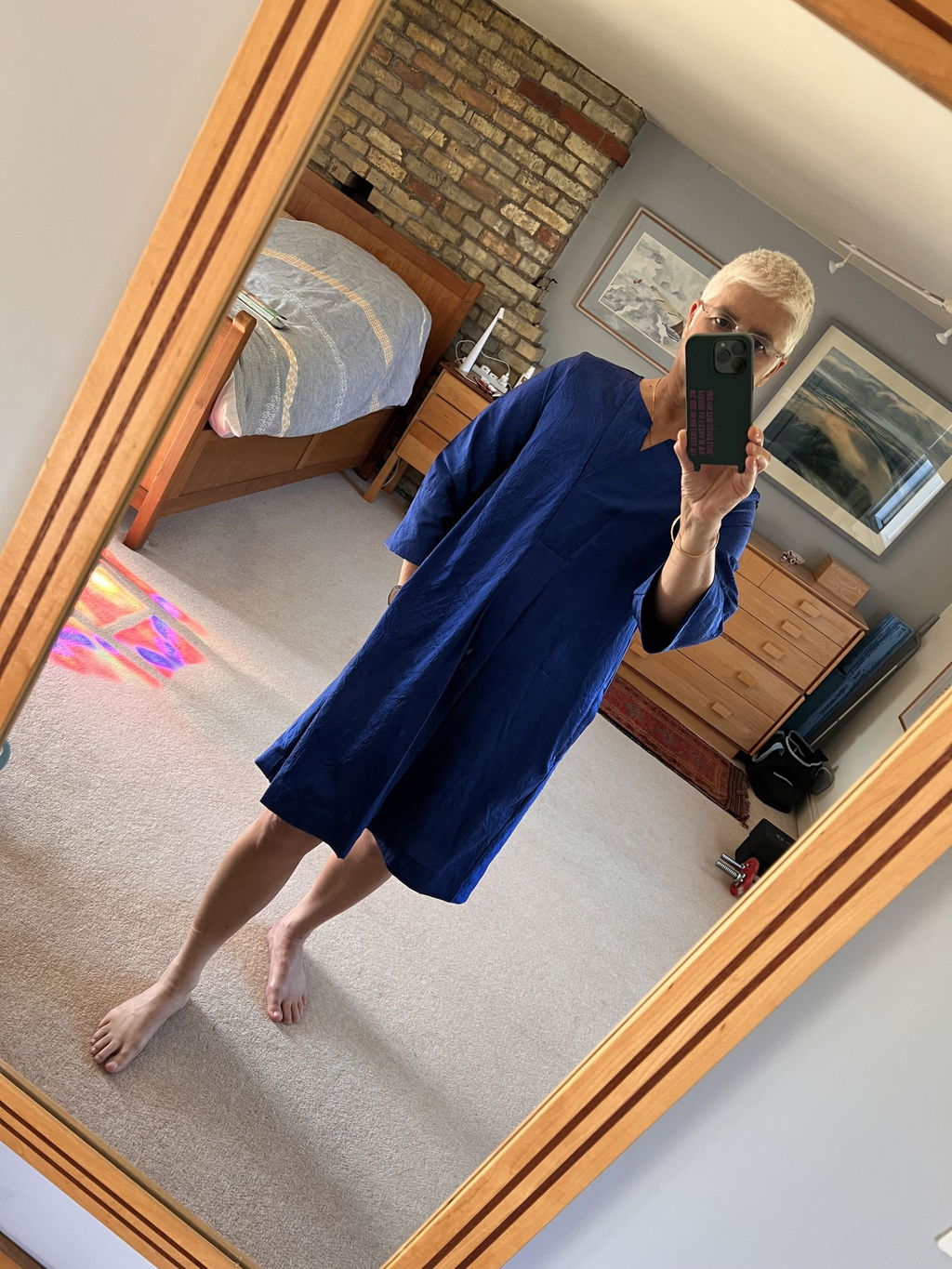

If you're thinking about making the Malvern Culottes, read Leanne's experience below for some hints and tips!


I chose to make a size D, even though my waist measurement is 2cm bigger than the stated measurement in the size chart.

Consequently, I opted for View B, hoping the elasticated back waist would grant me some wiggle room, which it happily did.

I would base the size you choose on your waist measurement, even if your hips are larger than the measurements stated in the chart: due to the nature of the pattern there really is ample fabric circumference around the hips.

And, since you attach the buttons to the waistband right at the end, there is also the possibility to shift those buttons over slightly, should you need to.

That said, it's worth bearing in mind that a greater waist to hip difference might result in the pleats 'spreading out' and hanging differently to what you see depicted in the sample illustrations and photos, so ultimately just go with the size that most closely matches your waist and hip measurements.

You may have seen this mentioned already, but do yourself a favour and print out just your size (as opposed to the full nested size range) as the multiple pleat notches become confusing if you have all sizes and everything is overlapping.
I used 2.5 metres of 140cm wide fabric for a size D, with an extra 6cm added onto my culottes for #SewingTall (I am 178cm). I just about managed to squeeze the pattern pieces on.

The fabric I chose is a (now discontinued) mid-weight washed linen. I could have pressed the pleats more crisply for a more pronounced effect, but I personally like gentle undulating folds and a bit of swish.

To figure out my elastic length I used the following equation (provided in the instructions):
Waist measurement: 78cm
Waist measurement halved = 39cm
10% of 39cm = 3.9cm
39cm-3.9cm = 35.1cm (plus seam allowance which is 1cm on either end = 2cm total)
Estimated total elastic length = 37.1cm. (I cut the elastic a few centimetres longer, just in case: easier to remove surplus than add it back on once it's been cut too short. In the picture below you can see I've chalked in the estimated length).

I tried the culottes on and adjusted the elastic until sitting firmly, but comfortably.
My actual final elastic length was 38cm, for a size D.
Note: Bear in mind that since the back waistband section is actually smaller than your waist measurement halved (because the waistband side seams align with the side pleats on the culottes and NOT the culottes side seams themselves) you should have a bit of extra wiggle room in your elastic.
My elastic probably ended up being fractionally longer that the estimated amount due to:
• my waist measurement being 2cm bigger than a standard size D
•my personal fit preference: prioritising comfort over snugness
•bloating (TMI?! (I finished my culottes late in the evening, right at THAT time of month)).

The more challenging aspects of this pattern include the bias bound opening and wrapping your head around all the pleating.


Don't worry, we've made an accompanying sewalong with videos illuminating the trickier parts!

I found this project to be just the right amount of engaging: the effort to reward ratio was spot on for me. I think intermediate sewists will enjoy sinking their teeth into this one.
Confident beginners needn't shy away! Remember, sewing patterns are just a sequence of steps, to be tackled one at a time.

My favourite part of the design is the way the side seam and pocket are concealed within a fold of a pleat, it just seems really unique: a hidden delight.
Also, special mention must be given to that centre back pleat!

You can check out the Malvern Culottes pattern here.